
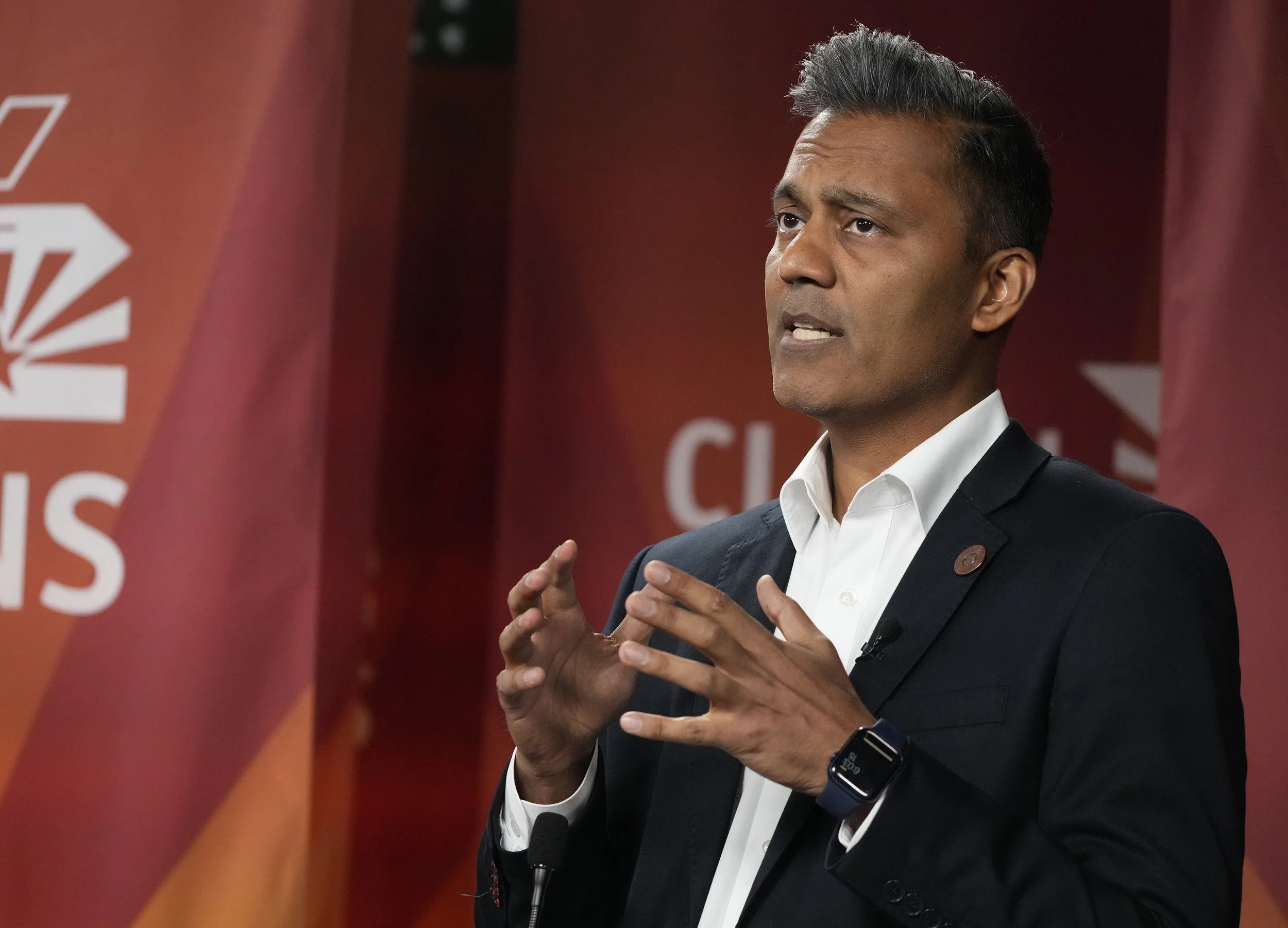
Amish Shah Parents: His Gujarati Family, Indian Roots and Childhood in Chicago
Amish Shah drew fresh attention on November 5, 2026, after declaring victory in Arizona’s 1st Congressional District race against Republican Jay Feely. Decision Desk HQ projected him as the winner, while local reporting noted that the Associated Press had not yet called the contest in its Wednesday evening update. The result brought renewed interest in the Indian American physician’s background, including his Gujarati immigrant parents.
Shah was born and raised in Chicago. His mother and father came to the United States from India as engineering students, and he has spoken about their role in keeping him connected with his Indian roots while he grew up in America.
In a 2023 interview, Shah said his parents moved to the United States in 1969 and were living in Chicago at the time of that conversation. He described their generation as concentrating on education, stability and establishing a foundation for their families.
His father is Jain and his mother is Hindu. Those family traditions are among the personal details Shah has discussed publicly, although the reliable biographical sources reviewed for this profile do not establish both parents’ full names.
Who are Amish Shah’s parents and where did they come from?
Shah’s parents are Gujarati immigrants from India. Biographical accounts describe both as engineering students when they arrived in the United States, placing education at the beginning of their American story.
The broad reference to the 1960s in some biographies is consistent with the more specific year Shah gave in his own interview: 1969. That detail comes from his account of his family’s migration rather than an assumption based on his age.
Their son grew up in Chicago before attending Northwestern University in nearby Evanston. His later career took him to New York and Arizona, but his childhood and his parents’ early American life were rooted in Illinois.
Shah has not presented his parents as political figures. Their public significance comes through the family history he has shared, particularly the experience of building a life in a new country and passing cultural traditions to the next generation.
There is limited reliable information about their individual careers after their studies. It would therefore be inaccurate to turn their engineering education into specific claims about employers, businesses or professional titles that have not been documented.
How did his Jain and Hindu family background influence him?
Shah has described his father as Jain and his mother as Hindu. In discussing his Indian American identity, he has spoken about visiting different religious and cultural centers and wanting community members to feel represented in public life.
He also recalled regular childhood trips to India. His parents took him there at least once every four years, he said in 2023, helping him maintain relationships with relatives and a connection with his family’s origins.
Those visits were part of a continuing relationship with India rather than a single adult discovery of his heritage. Shah said he remained in contact with cousins and other relatives over the years.
He has identified nonviolence, nonmaterialism and openness to different perspectives as meaningful elements of his Jain heritage. He connected those ideas with lessons learned through religious gatherings during his youth.
His campaign biography also identifies him as fluent in Gujarati. Together with his own comments about family visits, that provides a concrete example of the cultural connection he retained while pursuing an American education and career.
These are traditions Shah has discussed in his own terms. They should not be used to assume that every member of his family follows identical practices or holds the same political views.
How did Shah move from his Chicago upbringing into medicine and politics?
Shah attended Northwestern University and studied economics before completing medical training through its Honors Program in Medical Education. He later earned a Master of Public Health degree at the University of California, Berkeley, with a merit scholarship.
His professional training included emergency medicine residency in New York City. He subsequently taught medical students and residents at Mount Sinai, combining clinical work with academic research.
Sports medicine became another part of his career. He worked with the New York Jets on emergency medical care and later completed a sports medicine fellowship at the University of Arizona.
That professional path eventually brought him into Arizona public life. He won election to the state House in 2018 and won again in 2020 and 2022, serving before his congressional campaigns.
His campaign has emphasized healthcare affordability, public safety, teacher pay and support for small businesses. Those are his stated political priorities; the public record does not establish that his parents directed his decisions on those issues.
In his 2023 interview, Shah contrasted his parents’ task of establishing themselves in America with the opportunities available to their children. He described public service as one way the next generation could participate more fully in the country’s civic life.
That account gives the clearest picture of his parents’ place in his story: Gujarati students who immigrated, raised their son in Chicago and maintained family connections with India. Their names remain less publicly documented than the education, cultural background and migration history Shah has chosen to share.

