Kamala Harris and Jamie Davis: How a Major Democratic Endorsement Shaped the Louisiana Senate Contest
Former Vice President Kamala Harris threw her support behind Democratic Louisiana Senate candidate Jamie Davis in a significant last-minute endorsement ahead of the state’s closely watched election. Harris described Davis as a fighter who would challenge President Donald Trump’s administration, bringing national Democratic attention to a contest that Republicans had been widely expected to win.
The endorsement came as Davis, a farmer and former local government official from Tensas Parish, attempted to defeat Republican U.S. Representative Julia Letlow. The race attracted additional interest after campaign-backed polling suggested a closer contest than earlier political forecasts had indicated.
Kamala Harris Backs Jamie Davis for U.S. Senate
Kamala Harris’s endorsement gave Jamie Davis a prominent national supporter during the final hours of his Senate campaign.
In a social media statement reported on November 2, Harris praised Davis as a candidate willing to confront the Trump administration and represent Louisiana residents in Washington.
She described him as a fighter who would challenge what she characterized as a deeply ineffective and corrupt presidential administration.
Her remarks placed the Louisiana election within the broader national debate over Trump’s leadership and the direction of the federal government.
The endorsement was particularly notable because Louisiana has remained a difficult state for Democratic Senate candidates.
Republicans have controlled both of Louisiana’s U.S. Senate seats for more than a decade, while Trump received approximately 60.2 percent of the state’s presidential vote in 2024.
Harris’s decision to support Davis highlighted Democratic interest in challenging Republican dominance, even in states traditionally considered safe for the GOP.
Who Is Jamie Davis, the Louisiana Senate Candidate?
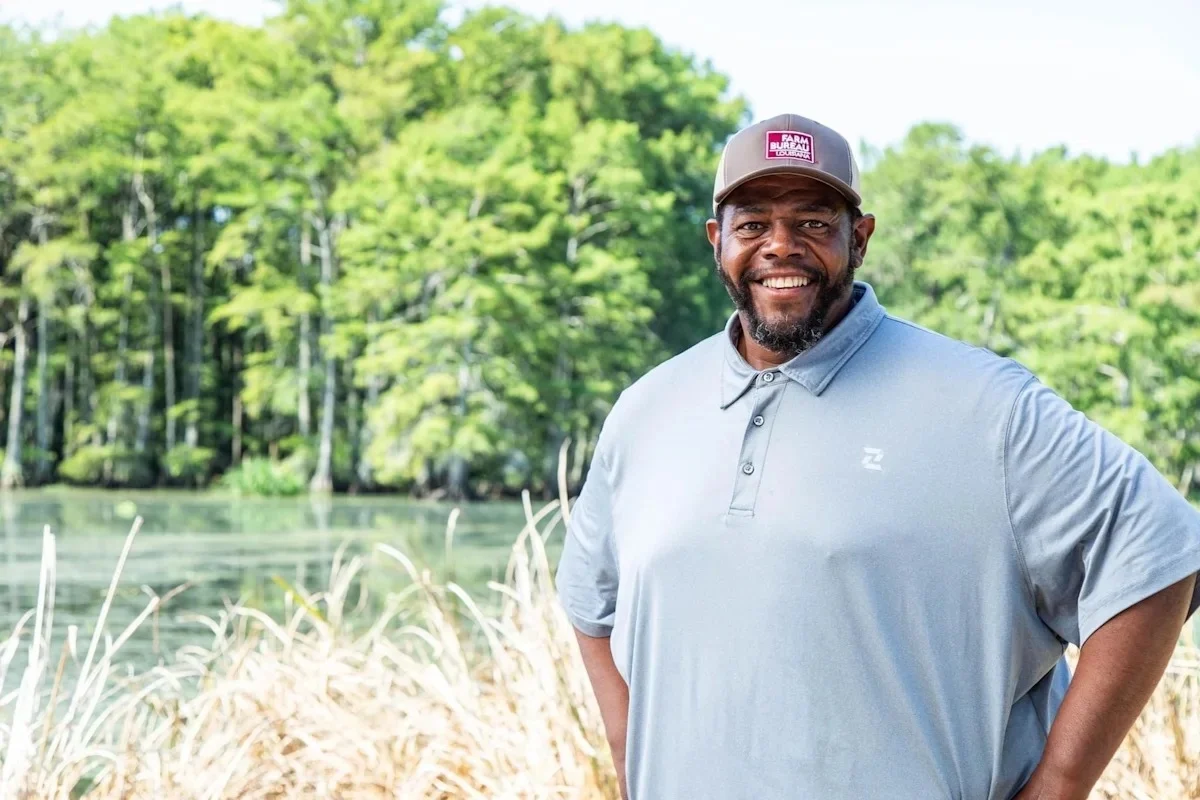
Jamie Davis is a third-generation farmer from Tensas Parish, Louisiana, who entered the Senate race with a background in agriculture and local government.
Before seeking federal office, he served on the Tensas Parish Police Jury, the local governing body responsible for various county-level administrative functions in Louisiana.
Davis operates a family farming business covering approximately 3,200 acres. His agricultural experience has influenced his political positions, particularly on fuel prices, operating expenses, rural economic development, and government accountability.
During his campaign, Davis presented himself as a candidate familiar with the financial pressures facing working families and agricultural communities.
He also emphasized affordable healthcare, voting rights, and stronger oversight of emerging technologies.
On healthcare, Davis supported protecting Medicaid and Medicare while restoring assistance designed to make health insurance more affordable.
He also raised concerns about the expansion of large artificial intelligence data centers, arguing that Louisiana should carefully examine their environmental and economic effects before approving additional projects.
His campaign sought to connect these issues with everyday concerns facing voters across the state.
Julia Letlow Receives Strong Support From Donald Trump
Jamie Davis faced Republican Julia Letlow, a member of the U.S. House of Representatives representing Louisiana’s 5th Congressional District.
Letlow entered the Senate contest with the endorsement of President Donald Trump, who had supported her challenge to incumbent Republican Senator Bill Cassidy.
Cassidy lost his party’s primary contest after facing criticism from Trump and his supporters over his vote to convict Trump during the former president’s second impeachment trial.
Letlow subsequently secured the Republican nomination and entered the general election as the favorite.
Trump continued supporting her campaign, including plans for a virtual rally shortly before Election Day.
He praised Letlow’s record and presented her as a strong representative for Louisiana.
Her campaign emphasized her congressional experience and argued that she had already delivered meaningful results for the state.
The competing endorsements from Harris and Trump added a national political dimension to a race that had initially received relatively limited attention outside Louisiana.
Polling Suggested a Competitive Final Stretch
Although Republicans were widely expected to retain the Louisiana Senate seat, polling released near Election Day suggested that Jamie Davis had narrowed the contest.
A survey conducted by Lincoln Park Strategies between October 29 and October 31 showed Davis and Letlow tied at 47 percent.
The findings were published by the Louisiana Democratic Party, and the survey was associated with the Davis campaign.
That connection was important because independent public polling on the race remained limited.
Earlier campaign-related surveys had also suggested that Davis was within striking distance of Letlow.
However, major election analysts continued to view the seat as strongly Republican despite the tighter polling figures.
The Cook Political Report maintained its solid Republican assessment, reflecting Louisiana’s voting history and the structural advantages enjoyed by the GOP.
For Davis, the polling provided an opportunity to argue that the race was more competitive than many observers had expected.
What Happened in the Louisiana Senate Election?
Louisiana voters went to the polls on November 3 to decide who would succeed Senator Bill Cassidy.
The contest proved closer than many early predictions had suggested.
As results came in on election night, Letlow held approximately 53 percent of the vote compared with Davis’s 47 percent, with some ballots still outstanding.
The race was called for Letlow, putting the Republican congresswoman on course to become Louisiana’s next U.S. senator.
Despite falling short, Davis performed competitively in a state where Republican candidates have maintained a substantial advantage in federal elections.
His campaign also attracted attention because a victory would have made him the first Black candidate elected to the U.S. Senate from Louisiana since Reconstruction.
Harris’s endorsement did not change the eventual outcome, but it demonstrated the national Democratic Party’s interest in the contest during the closing stage of the campaign.
The Louisiana race ultimately highlighted both the challenges Democrats face in Republican-leaning states and the potential for candidates with local backgrounds to make contests more competitive than initially expected.