
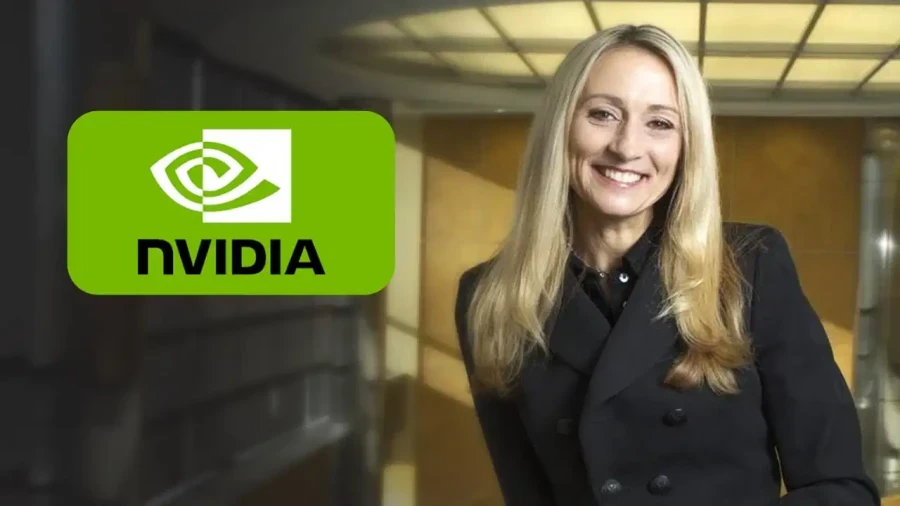
Colette Kress Nvidia CEO: How She Helped Build the Company’s AI Business in Israel
Colette Kress has been appointed interim CEO of Nvidia following the resignation of company co-founder Jensen Huang. The leadership change places the longtime chief financial officer in charge of one of the world’s most valuable technology companies at a critical moment for the artificial intelligence industry. Kress, who helped oversee Nvidia’s acquisition of Israeli networking company Mellanox Technologies, now faces the challenge of maintaining investor confidence while guiding the chipmaker through an unexpected transition.
The 59-year-old executive has worked at Nvidia since 2013 and played an important role in its transformation from a gaming graphics company into a global AI infrastructure leader. Her financial leadership, familiarity with Nvidia’s international operations and close involvement with its Israeli engineering teams have made her a central figure in the company’s expansion.
Why Did Colette Kress Become Nvidia’s Interim CEO?
Nvidia announced Kress as interim CEO on November 12, 2026, after Jensen Huang stepped down following controversy surrounding his personal relationships and allegations involving potential national security concerns.
Huang, who co-founded Nvidia in 1993, had led the company for more than three decades. His departure created an unprecedented leadership challenge for the chipmaker.
Nvidia’s board selected Kress because of her extensive financial experience and understanding of the company’s operations. She will oversee the business while directors search for a permanent chief executive.
Kress has emphasized the importance of maintaining customer relationships, supporting employees and continuing Nvidia’s existing technology strategy.
How Colette Kress Helped Expand Nvidia’s Business in Israel
One of Kress’ most important contributions involved Nvidia’s acquisition of Mellanox Technologies, an Israeli networking company.
Nvidia completed the approximately $7 billion transaction in April 2020. The acquisition provided advanced networking technology that allows large numbers of processors to communicate efficiently.
This capability became increasingly valuable as artificial intelligence systems required enormous computing resources.
Kress supported the acquisition because it expanded Nvidia’s ability to supply complete data center infrastructure rather than individual graphics processors.
The transaction also significantly increased Nvidia’s engineering presence in Israel, establishing the country as an important research and development center.
Why Mellanox Became Essential to Nvidia’s AI Strategy
Modern AI systems depend on more than powerful processors. Thousands of chips must exchange information rapidly while training and running increasingly complex models.
Mellanox specialized in high-performance networking technologies designed to support these demanding computing environments.
By combining Nvidia’s GPUs with Mellanox networking products, the company strengthened its ability to build integrated AI computing systems.
The acquisition helped Nvidia expand into data center networking, where reliable communication between processors is essential.
Kress previously described Mellanox as one of the strongest acquisitions she had encountered during her technology career.
Its success demonstrated how financial strategy and engineering innovation could work together to support Nvidia’s long-term growth.
Nvidia’s Growing Research and Development Presence in Israel
Following the Mellanox acquisition, Israel became one of Nvidia’s most important international engineering locations.
In 2023, the company employed approximately 3,200 people across Israeli offices, representing around 12% of its workforce at the time.
Its operations included facilities in Yokneam, Tel Aviv, Ra’anana and several other locations.
More recent reporting has placed Nvidia’s Israeli workforce at approximately 6,000 employees.
The company has also announced plans for a major campus near Haifa, designed to accommodate thousands of additional workers.
Israeli engineers contribute to networking technologies and other systems supporting Nvidia’s AI infrastructure.
The country’s growing importance has made the region central to the company’s international development strategy.
Colette Kress Previously Explained Her Close Connection to Israel
During a 2023 interview, Kress discussed how closely she worked with Nvidia’s Israeli operations.
She explained that her working day frequently began with meetings involving Israeli executives before continuing with colleagues in California.
The arrangement reflected the importance of Nvidia’s engineering teams outside the United States.
Kress also emphasized how Mellanox had expanded the company’s technological capabilities.
Her comments demonstrated that Israel was not simply another regional office location but an integral part of Nvidia’s broader AI business.
That relationship has become particularly relevant following her appointment as interim CEO.
Who Is Colette Kress?
Colette Kress is an American technology executive with more than three decades of experience in corporate finance.
She joined Nvidia in September 2013 as executive vice president and chief financial officer.
Before joining the company, she held senior financial positions at Cisco, Microsoft and Texas Instruments.
At Microsoft, she spent approximately 13 years in financial leadership roles, including serving as chief financial officer of the Server and Tools division.
She later became senior vice president and chief financial officer for Cisco’s Business Technology and Operations Finance organization.
Kress earned a bachelor’s degree in finance from the University of Arizona and an MBA from Southern Methodist University.
Her extensive background helped prepare her for Nvidia’s rapid expansion into artificial intelligence.
Colette Kress and Jensen Huang Had Different Approaches to Risk
Although Kress worked closely with Jensen Huang for more than a decade, the two executives reportedly disagreed over some major financial decisions.
Huang supported ambitious investments designed to accelerate Nvidia’s position in the AI industry.
Kress took a more cautious approach to certain financing commitments.
Reports indicate that she raised concerns about large investments involving companies that also purchased Nvidia technology.
These arrangements created questions about financial exposure and whether AI infrastructure spending could become overly dependent on interconnected business relationships.
Their disagreements reflected different management priorities rather than a complete rejection of Nvidia’s expansion strategy.
Kress’ willingness to challenge major financial commitments has contributed to her reputation as a disciplined executive.
Can Colette Kress Lead Nvidia Beyond Jensen Huang?
Kress now faces the challenge of leading a company whose identity has been closely associated with its founder.
Huang played a major role in developing Nvidia’s graphics processors, computing platforms and AI strategy.
His departure raises questions about how the company will maintain its technological momentum.
Kress brings extensive financial knowledge, investor relationships and operational experience.
However, she does not have the same engineering background as Huang.
Her immediate priorities include maintaining stability, supporting Nvidia’s development teams and reassuring customers about the continuity of its products.
The board has not announced whether she will become permanent CEO.
What Happens Next for Nvidia Under Colette Kress?
Nvidia is scheduled to report its quarterly financial results on November 17, 2026.
The earnings announcement will be an important early test of Kress’ leadership.
Investors will be watching for information about AI infrastructure demand, revenue expectations and the company’s investment commitments.
Questions about corporate governance and the circumstances surrounding Huang’s resignation may also remain significant.
Meanwhile, Nvidia’s Israeli operations are expected to continue contributing to its networking and computing technologies.
For Kress, the challenge is to preserve the company’s competitive advantages while navigating a leadership transition.
Her role in the Mellanox acquisition and Nvidia’s broader AI expansion provides valuable experience for that responsibility.
Colette Kress’ Role in Nvidia’s Future
Colette Kress has spent more than a decade helping Nvidia develop into a leading supplier of artificial intelligence infrastructure.
Her support for the Mellanox acquisition strengthened the company’s networking capabilities and expanded its research operations in Israel.
Now, as interim CEO, she must manage the business through one of its most significant leadership changes.
Her financial discipline and understanding of Nvidia’s global operations will be important as the company prepares for its next stage.
Whether Kress ultimately becomes permanent CEO remains uncertain, but her appointment has placed one of Nvidia’s most experienced executives at the center of its future.


